

On a typical Tuesday morning at Bankstown Local Court, dozens of individuals wait in silence, convinced that their first appearance will result in an immediate sentence. This fear often stems from a fundamental misunderstanding of what is a mention in court and how the NSW justice system actually functions. It's completely natural to feel a sense of dread when the stakes are this high. You deserve a partner who sees the person behind the paperwork and provides the stability you need during this crisis.
We promise to replace your anxiety with clarity by explaining exactly what happens during these brief but vital proceedings. This guide provides a strategic roadmap for your court date, detailing the procedural steps you'll face and explaining why early legal advocacy is your strongest shield against a complex bureaucracy. You don't have to navigate this journey alone; instead, you can move forward with the confidence that your rights are being protected by a dedicated advocate.
Key Takeaways
- Discover exactly what is a mention in court and how this brief procedural hearing serves as a vital status update for the Magistrate within the NSW legal system.
- Gain clarity on navigating the specific daily lists at Bankstown Local Court on Chapel Road, including how the courtroom hierarchy impacts when your matter is heard.
- Overcome the common fear of unexpected sentencing by understanding why these routine hearings are designed for case management rather than final judgments.
- Identify the essential documentation and strategic preparations required to transform a routine appearance into a proactive step toward restoring balance in your life.
- Explore how a Strategic Advocate can provide a protective shield during your hearing, ensuring your legal rights are defended and your emotional well-being is prioritized.
Defining the Court Mention: More Than Just a Date
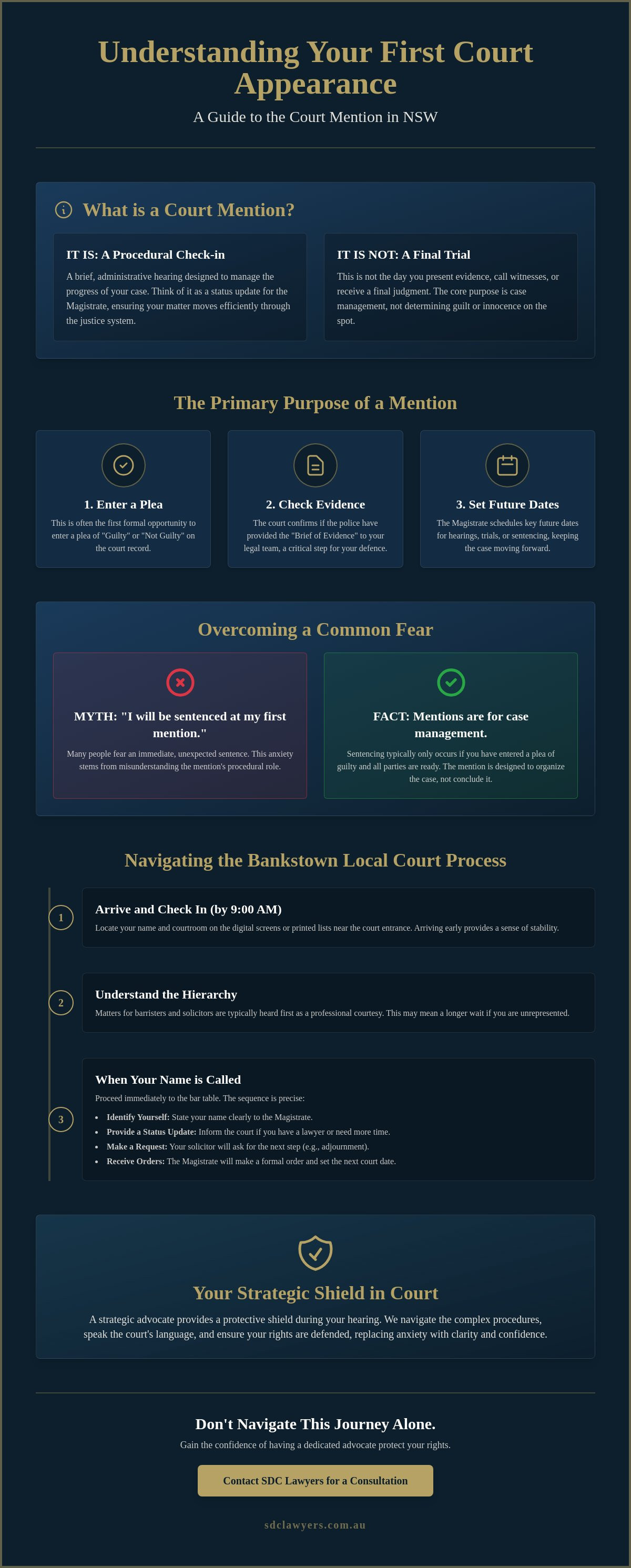
For many Bankstown residents, receiving a court notice feels like a heavy weight on their shoulders. It’s often the first step in a stressful journey, but understanding the terminology can restore your peace of mind. When you ask what is a mention in court, it’s helpful to view it through a procedural lens rather than a confrontational one. A mention is a brief procedural hearing used by the court to manage the progress of a case. In the NSW Local Court system, it serves as a status update for the Magistrate to see where the matter stands.
You can think of a mention as the administrative heartbeat of the litigation process. While the term might sound intimidating, the legal definition of a court hearing encompasses various types of proceedings, with mentions being the most common administrative variety in Australia. It’s vital to distinguish this from a "hearing" or a "trial." Unlike a final hearing where witnesses give evidence and a judgment is delivered, a mention is a short appearance designed to keep the wheels of justice turning. This distinction usually lowers the immediate anxiety of our clients because it means you aren't fighting the entire case on day one.
The Primary Purpose of a Mention Hearing
Magistrates use these dates to ensure your matter moves forward efficiently. During a mention, the court focuses on three strategic milestones:
- Setting future dates: This includes scheduling dates for hearings, trials, or sentencing if a plea has already been entered.
- Service of Evidence: The court checks if the police have provided the "Brief of Evidence" to your legal team, which is a critical step in building your Defence.
- Entering a Plea: This is often the first formal opportunity for parties to enter a plea of "Guilty" or "Not Guilty" on the record.
Why Mentions Matter in NSW Law
Mentions ensure cases don't stall in the judicial system. They provide a vital forum for "case conferencing" between solicitors and police. This is where we identify which issues are genuinely in dispute to save the court's time and your resources. By narrowing the focus, we can provide the Strategic advocacy required to protect your rights. These brief appearances prevent the backlog of cases that can often plague the legal system, ensuring that every individual receives a timely path toward resolution. Understanding what is a mention in court allows you to approach the Bankstown Local Court with a sense of control and clarity.
Navigating the Bankstown Local Court Process
The Bankstown Local Court, situated on Chapel Road, serves as a vital hub for justice within our community. Each morning, the court releases a daily list that dictates the flow of proceedings. It is essential to arrive by 9:00 AM to locate your name on the digital screens or printed lists posted near the entrance. Finding your name early provides a necessary sense of stability before the session begins. You will quickly notice a specific hierarchy in how matters are called. Barristers and solicitors are typically heard before unrepresented parties. This professional courtesy allows the Magistrate to move through administrative tasks efficiently, though it often means a longer wait for those appearing on their own.
Standing before a Magistrate in your local community carries a heavy emotional weight. It is a formal environment that can feel intimidating, especially when your personal life is being discussed in a public forum. This experience is often the most stressful part of the legal journey. We view our role as a strategic advocate, providing a protective shield between you and the complexities of the justice system. Having a clear understanding of what is a mention in court helps demystify the experience. It ensures you aren't caught off guard by the rapid pace of the courtroom or the technical language used by the bench.
What Happens When Your Name is Called?
When the court officer calls your name, you must move to the bar table immediately. The process follows a precise four step sequence. First, you identify yourself to the Magistrate, speaking clearly and respectfully. Second, the Magistrate asks for a status update. They want to know if you've sought legal advice or if you're ready to enter a plea. Third, you or your solicitor will make a strategic request, such as asking for more time to review evidence. Finally, the Magistrate makes a formal order and provides the next date for your appearance. This sequence ensures your matter moves forward with purpose.
Common Outcomes of a Mention
A mention is a procedural gateway with several potential results. The most frequent outcome is an adjournment. This is a strategic delay that allows you to gather further evidence, review police statements, or finalize your legal strategy. While the withdrawal of charges is rare during a first appearance, it can occur if negotiations with the prosecution are successful early on. Another critical outcome involves bail variations. If your living or working situation has changed, this is the appropriate time to ask the court to modify your existing bail conditions. If you are feeling overwhelmed by these requirements, the team at SDC Lawyers is ready to offer the support and guidance you deserve.
The rhythm of the court is steady and deliberate. Every order made by the Magistrate is a building block for your final defence. By arriving early and observing the proceedings, you can gain a better perspective on how the law functions in Bankstown. Our focus is always on restoring balance to your life by ensuring you are never navigating these high stakes moments alone. Understanding what is a mention in court is the first step in taking control of your legal future with confidence and clarity.
Common Misconceptions: Can You Be Sentenced at a Mention?
Many Bankstown residents approach their first court date with a heavy sense of dread. The most common fear we encounter is the belief that you will be taken into custody immediately. It's vital to understand that a mention is primarily a procedural stepping stone. In the vast majority of cases, you won't be sentenced or sent to jail during this brief appearance. Understanding what is a mention in court helps demystify the process and reduces the emotional weight of the day.
Sentencing is a complex process. The court must consider your personal history, the specific facts of the case, and any subjective evidence you provide. This requires a dedicated sentencing hearing, which is scheduled for a later date. However, there's a significant exception. If you choose to enter a plea of guilty on the spot, the Magistrate may decide to finalise the matter then and there. While this might seem like a quick way to end the stress, it often leads to harsher outcomes because you haven't prepared a strategic defence or gathered character references.
Winging it in court is a recipe for accidental procedural disadvantages. Without a clear plan, you might agree to facts that are inaccurate or miss deadlines for filing evidence. These small errors can snowball, making it much harder to achieve a positive result later in your journey.
The Risk of Entering a Premature Plea
You should never enter a plea before your legal team has reviewed the full police brief of evidence. This document contains the statements and forensic findings the prosecution intends to use against you. Entering a "not guilty" plea during early mentions is often a strategic necessity. It buys the time required to find inconsistencies in the police case. Our solicitors act as your voice, ensuring you don't make self-incriminating statements that could damage your future. We focus on restoring balance to a system that can often feel stacked against the individual.
Self-Representation vs. Strategic Advocacy
Walking into Bankstown Local Court alone is a significant risk. The Magistrate's role is to ensure the law is followed; they cannot provide you with legal advice or suggest the best path forward. Unrepresented litigants frequently miss opportunities for "Section 10" dismissals under the Crimes (Sentencing Procedure) Act 1999. This specific order allows a person to be found guilty without a criminal conviction being recorded, which is vital for maintaining employment. SDC Lawyers serves as a protective shield, navigating these bureaucratic hurdles to secure your peace of mind. We provide the steady, calm influence you need during this time of crisis.
How to Prepare for Your Mention Hearing Strategically
Preparation acts as the most effective shield against courtroom anxiety. When you're trying to understand what is a mention in court, it's vital to view it as a tactical milestone rather than a mere administrative hurdle. Arriving at Bankstown Local Court without a clear plan can lead to missed opportunities for a favorable outcome; strategic planning ensures you remain in control of the narrative from the very first call of the list.
Your legal team will need specific documentation to advocate for you effectively. This often includes character references from respected Bankstown community members, detailed medical reports, or updates regarding your employment status. Gathering these materials at least 14 days before your appearance allows your solicitor to review them for consistency and impact. A pre-mention consultation is the time to iron out these details, ensuring your defense is robust and your personal circumstances are clearly communicated to the Magistrate.
Mental resilience is equally important. Bankstown Local Court is one of the busiest in New South Wales, often handling over 50 matters in a single morning session. You'll likely face a "waiting game" where your name might not be called for several hours. Staying calm and focused during this period is essential. It's a time for patience, not panic.
A Checklist for the Day of Court
- Dress code: Wear professional attire, such as a suit or smart business wear. This signals respect for the judicial process and shows the court you're taking the matter seriously.
- Arrival time: Aim to be at the court by 9:00 AM. Even if your matter is listed later in the morning, being present for the start of the session ensures you don't miss vital instructions from the court officer.
- Communication: Keep your solicitor's direct contact details saved in your phone. Ensure your device is switched to silent before entering the courtroom.
Integrating Other Legal Concerns
Criminal proceedings don't exist in a vacuum. A charge can have immediate ripples across other areas of your life. For instance, a conviction or even an ongoing matter might complicate a partner visa australia application due to strict character requirements enforced by the Department of Home Affairs. Similarly, if you're managing a separation, you must disclose how a criminal mention might impact a binding financial agreement or parenting orders. International students must be particularly cautious; we prioritize ensuring your student visa status remains protected throughout the litigation process. Transparency with your lawyer about these overlapping issues is the only way to build a truly comprehensive defense.
Don't face the complexities of the court system alone. Contact SDC Lawyers today for a strategic consultation to protect your future.
Why Strategic Representation Matters at SDC Lawyers
Navigating the legal system in Bankstown can feel like an uphill battle. At SDC Lawyers, we believe your first appearance shouldn't be a source of panic. Understanding what is a mention in court is only the beginning of a much larger journey. Our team serves as your Strategic Advocate, ensuring that this procedural step sets a firm foundation for your entire case. We provide a human-first approach that prioritizes your emotional well-being while we handle the technical complexities of the law.
We act as a protective shield between you and powerful entities like the DVA, the police, or large insurance companies. These organizations often rely on bureaucratic delays to wear you down. We don't let that happen. By taking control of the litigation process from day one, we remove the burden of stress from your shoulders. Our focus remains on your entitlements and restoring the balance that a legal setback often disrupts. We offer a steady, calm influence during your time of crisis.
- Expert Guidance: We manage all communications with the police and insurance adjusters.
- Strategic Planning: Every move we make is designed to reach a resolution quickly and fairly.
- Local Knowledge: We understand the specific dynamics of the Bankstown Local Court and its 2026 operational procedures.
Our Compassionate Approach to Litigation
Every client who walks through our doors is facing a unique hardship. Whether it's a medical negligence claim or a complex military service injury, we move you toward a clear, strategic path. Bankstown is a diverse community with varied needs; we tailor our solutions to fit your specific circumstances. We don't just see a case number. We see a person looking to regain control of their life. Our goal is to secure the justice you deserve while providing the steady, calm influence you need. Knowing what is a mention in court helps you feel prepared, but our advocacy ensures you are protected.
Book Your Consultation Today
You don't have to face the Magistrate alone. Let us craft a robust defence that protects your future. Our Bankstown office is ready to help you move from uncertainty to confidence. We offer a "No Win, No Fee" commitment because we believe legal support should be accessible to everyone, not just those with deep pockets. This is our moral promise of integrity and professionalism. Contact SDC Lawyers today to schedule your consultation and take the first step toward a successful resolution. We have the stamina and the expertise to see your case through to the end.
Secure Your Path Forward at Bankstown Local Court
Navigating the legal system feels overwhelming, but your first appearance doesn't have to be a source of fear. Understanding what is a mention in court is the first step toward regaining control of your legal journey. Remember that a mention is primarily a procedural milestone rather than a final sentencing hearing; this distinction provides you with the vital time needed to build a robust case. Bankstown Local Court remains one of the busiest legal hubs in New South Wales, and entering that environment without a clear plan can lead to unnecessary delays or complications.
At SDC Lawyers, we provide the strategic advocacy needed to navigate the Bankstown legal circuit with quiet confidence. We combine professional authority with a human-first approach, ensuring you feel supported through every stage of the process. Our team acts as a protective shield, handling the complex bureaucracy of the NSW justice system so you can focus on your emotional well-being. We're committed to restoring balance to your life through meticulous preparation and tactical excellence in the courtroom.
Secure your strategic defence today; Book a consultation with SDC Lawyers
You have the resilience to see this through, and with the right partner, you can face the future with peace of mind.
Frequently Asked Questions
Do I have to attend a mention in court if I have a lawyer?
You generally don't need to attend a mention if your lawyer has received clear instructions to appear on your behalf. However, if you're on bail or the Magistrate has specifically ordered your attendance, your presence is mandatory. Having a strategic representative ensures your interests are protected while you focus on your personal well-being. Most mentions at Bankstown Local Court last less than 5 minutes.
What happens if I miss my court mention date?
Missing your court date often results in the Magistrate issuing a warrant for your arrest. If you're on bail, this also constitutes a breach of your conditions, which can lead to further criminal charges. In 2023, NSW courts issued thousands of warrants for non-appearance. If an emergency happens, contact your lawyer immediately so they can explain the situation to the court and protect your rights.
Can a mention be done over the phone or via AVL?
Many mentions now occur via Audio Visual Link (AVL) or telephone, particularly for defendants in custody or those living in remote areas. You must apply for this through the Registrar at Bankstown Local Court at least 7 days before your scheduled date. Understanding what is a mention in court includes knowing these digital options. This flexibility helps reduce the stress of physical travel during difficult times.
How many mentions will there be before my case is finished?
Most criminal matters require between 2 and 4 mentions before reaching a final resolution or moving to a hearing. The first mention is usually for a plea, while subsequent dates allow for the service of a brief of evidence. We work to ensure this process moves efficiently. Clear communication helps manage the timeline of your legal journey and restores balance to your life.
Is a mention the same as a committal hearing?
A mention is not the same as a committal hearing. While a mention is a brief procedural check-in, a committal hearing involves a Magistrate deciding if there's enough evidence for a serious case to go to the District or Supreme Court. Under the Justice Legislation Amendment (Committals) Act 2018, this process was streamlined. We provide a protective shield through both of these distinct legal stages.
Will the media be present at my court mention in Bankstown?
Media presence is rare for routine mentions at Bankstown Local Court, though reporters can legally attend as courts are generally open to the public. High-profile cases or those involving specific public interest are more likely to attract journalists. We focus on your privacy and strategic defence to minimize unnecessary public exposure. Our team handles the pressure so you don't have to.
Do I need to bring witnesses to a mention hearing?
You don't need to bring witnesses to a mention hearing because no evidence is taken and no testimony is heard during these brief appearances. Witnesses are only required during a final hearing or trial where the facts of the case are contested. Knowing what is a mention in court helps you prepare correctly without the added stress of coordinating witness schedules prematurely.
What should I wear to Bankstown Local Court?
You should wear neat, conservative business attire to show respect for the judicial proceedings. This usually means a collared shirt, trousers, or a professional dress or skirt. Avoid wearing hats, sunglasses, or clothing with offensive slogans. First impressions matter in the legal system. Dressing appropriately reflects your serious approach to the matter and helps maintain a professional atmosphere during your appearance.