

Imagine sitting in a quiet Bankstown cafe, clutching a letter that says your visa was refused, feeling the weight of a potential life away from your family. It's a heavy burden to carry alone. You likely feel that the transition from the Administrative Appeals Tribunal (AAT) to the Administrative Review Tribunal (ART) on 14 October 2024 has only made the path to residency more uncertain. We understand that the fear of being separated from your loved ones is real, and the thought of standing before a Member can be paralyzing.
Our goal is to replace that anxiety with a sense of quiet confidence. This guide provides a framework for immigration tribunal preparation that is both methodical and protective, ensuring your future in Australia remains secure. We will show you how to build a robust legal defence through strategic evidence collection and clear communication. You will learn exactly how to prepare your case, what to expect during the hearing, and how to present your story with the clarity needed for a successful visa grant or remittal.
Key Takeaways
- Understand how the transition to the Administrative Review Tribunal (ART) creates a vital second chance to secure your Australian visa through a merits review.
- Gain clarity on the NSW hearing process to ensure you feel supported and prepared when interacting with the Tribunal Member and interpreters.
- Discover why professional immigration tribunal preparation is critical for navigating the complex 2026 amendments to the Migration Act 1958.
- Learn a strategic framework for auditing past refusals and gathering the new, compelling evidence necessary to build a robust case.
- Explore the unique benefits of partnering with a local Bankstown solicitor who provides a human-first approach to protect your future in Australia.
Navigating the New Administrative Review Tribunal (ART) Landscape in 2026
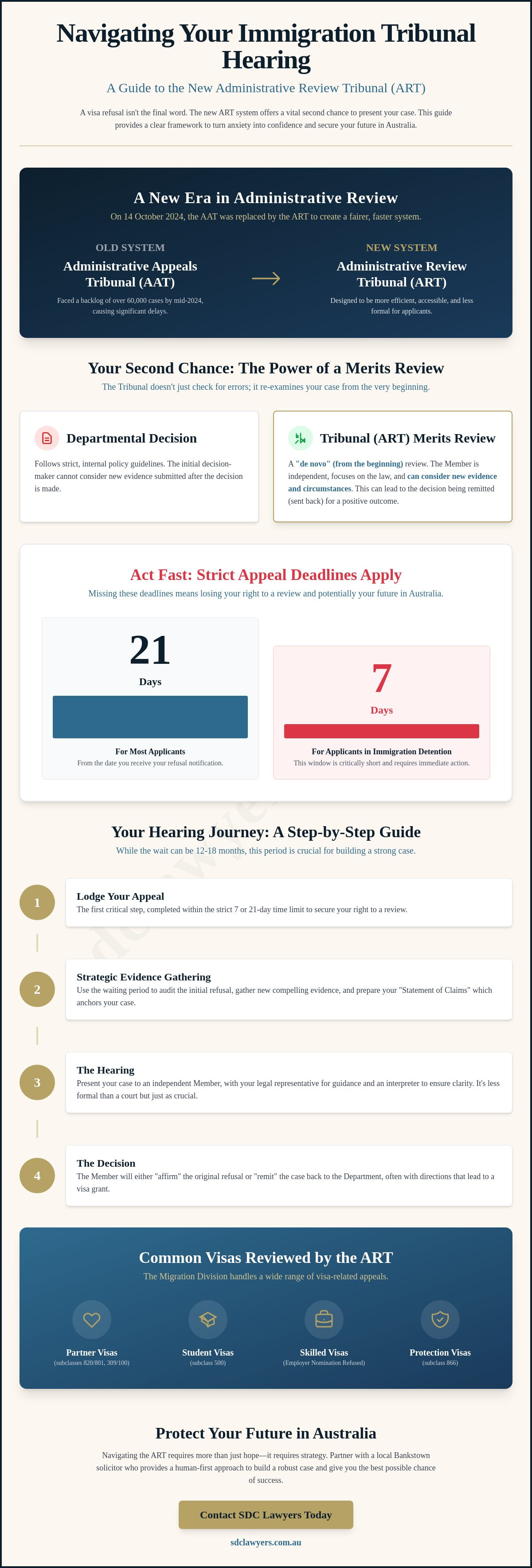
Receiving a visa refusal letter feels like a heavy blow. It's often the most stressful moment for Bankstown families striving for a future in Australia. However, the legal landscape has shifted. On 14 October 2024, the Administrative Review Tribunal (ART) replaced the Administrative Appeals Tribunal (AAT) to provide a more efficient and accessible review process. This change isn't just administrative; it represents a commitment to fairness that helps restore balance to your migration journey. Effective immigration tribunal preparation starts with understanding that this new body operates with a fresh set of eyes on your specific circumstances.
The primary difference between a Departmental decision and a Tribunal review lies in the level of scrutiny. While the Department of Home Affairs follows strict policy guidelines, the Tribunal focuses on the law and the individual merits of your life. This is your second chance to present your story. It's a vital opportunity to correct misunderstandings and provide the evidence that was perhaps missing during your initial application.
The Transition from AAT to ART: What You Need to Know
The Australian government overhauled the system to resolve a backlog that had grown to over 60,000 cases by mid-2024. This new framework aims to be faster and less formal, making it easier for individuals to engage with the law. Most Bankstown residents will interact with the Migration Division. This division commonly reviews decisions regarding:
- Partner visas (Subclasses 820/801 and 309/100)
- Student visas (Subclass 500)
- Skilled visas where an employer nomination was refused
- Protection visas (Subclass 866)
During this complex transition, SDC Lawyers provides a strategic shield. We ensure you don't get lost in the new procedural rules that took full effect by 2026. Our team translates complex legal requirements into a clear path forward, protecting your rights at every turn.
Why Your Initial Refusal Isn’t the End of the Road
A Tribunal Member acts as an independent decision-maker who isn't bound by the Department's earlier conclusions. They conduct a Merits Review, which is a "de novo" or "from the beginning" look at the facts of your case. The Member considers all evidence, including new information that wasn't available when you first applied. If the Member finds the Department made an error, they can "remit" the decision. This sends your application back to the Department with a direction that you meet specific criteria, which frequently leads to a visa grant.
Time is your most critical resource. Most applicants have only 21 days from the date of refusal to lodge an appeal. For those in immigration detention, this window shrinks to just 7 days. Missing these strict deadlines usually means losing your right to stay in Australia. We focus on immediate action to protect your status. Our approach to immigration tribunal preparation prioritises these timelines to ensure your voice is heard before the window of opportunity closes. We stand by you, providing the steady guidance needed to navigate this high-stakes environment with confidence.
Understanding the ART Hearing Process in New South Wales
The Administrative Review Tribunal (ART), which replaced the previous appeals system in late 2024, represents a significant shift in how visa disputes are resolved. For Bankstown residents, the hearing is the most critical stage of your journey. These proceedings typically occur at the Sydney registry on Clarence Street, though video link options are increasingly common to accommodate different needs. The environment is designed to be less formal than a courtroom, yet the stakes remain incredibly high. A Member presides over the hearing, acting as an independent decision-maker who reviews your case from scratch. Your representative stands by your side to provide guidance, while a professional interpreter ensures your testimony is accurately recorded; a vital service for our diverse local community.
Effective immigration tribunal preparation begins long before you step into the room. The process starts with the lodgement of your appeal, usually within 21 to 28 days of a refusal. While the wait for a hearing date can extend between 12 and 18 months depending on the case load, this time is a valuable window for gathering evidence. Your "Statement of Claims" acts as the strategic anchor for your entire case. It outlines the legal and factual reasons why the original decision was wrong. You can verify current filing requirements and updated procedures on the Official Administrative Review Tribunal website.
What Happens During an Immigration Tribunal Hearing?
The hearing follows a structured path: an opening address, a period of detailed questioning by the Member, and a closing statement. The Member has a legal duty to act with procedural fairness. This means they must give you a genuine opportunity to respond to any information that might lead to an unfavorable result. When handling difficult questions regarding your partner visa australia application, honesty and consistency are your best tools. We help you practice articulating the nuances of your relationship so you feel steady under pressure. If you feel overwhelmed by the complexity of these rules, seeking a strategic assessment can provide the clarity you need.
The Role of Witnesses and Support Persons
Witnesses can provide powerful external validation of your claims. Choosing respected members of the Bankstown community, such as religious leaders, long-term employers, or family friends, can bolster your character profile. It's important to distinguish between a witness and a support person. A support person sits with you for emotional stability but cannot speak on your behalf. A witness, however, provides formal testimony. We work with your witnesses to ensure their statements are consistent with your overall immigration tribunal preparation strategy. This collaborative approach ensures that every voice in the room reinforces a single, persuasive narrative for the Member to consider.
Strategic Legal Advocacy vs. Self-Representation: Weighing the Risks
Choosing to face the Administrative Review Tribunal (ART) alone is a decision often driven by the desire to save on legal fees. However, when your future in Australia is at stake, the financial cost of an advocate is rarely the most significant factor to consider. The Migration Act 1958 is a dense, volatile piece of legislation. Following the 2026 amendments, the complexity of these laws has only deepened. These updates introduced stricter evidentiary thresholds and tighter deadlines that catch many Bankstown residents off guard. Facing a seasoned Department representative without a professional shield puts you at a distinct disadvantage.
The numbers tell a clear story. Historical data suggests that applicants with professional representation are nearly twice as likely to receive a favourable outcome compared to those who represent themselves. This isn't just about knowing the law; it's about the emotional resilience required to stand before a Member. Self-advocacy is exhausting. It forces you to be both the grieving witness and the objective lawyer at the same time. This emotional toll can lead to fragmented testimony or missed opportunities to correct the record during the hearing. Proper immigration tribunal preparation requires a level of detachment that is almost impossible to achieve when your own life is the subject of the case.
Common Mistakes Made by Self-Represented Applicants
- Submitting irrelevant evidence: Many applicants flood the Tribunal with hundreds of pages of character references that don't address the actual legal reasons for their visa refusal.
- Contradictory testimony: Without a strategic review of previous applications, it's easy to provide dates or facts that conflict with past statements, which harms your credibility.
- Misunderstanding GTE requirements: For those navigating a student visa appeal, failing to address the specific 2026 Genuine Temporary Entrant criteria is a frequent cause of failure.
How a Strategic Advocate Changes the Outcome
A strategic advocate acts as your professional shield. We don't just tell your story; we translate your life experiences into the precise language of the law. This involves drafting persuasive legal submissions that cite current case law to guide the Member’s decision. While the official guide to the ART hearing process provides a procedural overview, an advocate identifies "jurisdictional errors" where the Department may have failed in its legal duty. This technical expertise can win a case even when the facts seem difficult. Our goal is to provide the peace of mind that comes from knowing a professional is managing the litigation, allowing you to focus on your family and your community while we handle the immigration tribunal preparation. We provide the stamina and the expertise to see the journey through to the end.
Step-by-Step: How to Prepare Your Evidence for a Tribunal Hearing
Success at the Tribunal isn't about luck. It's about a methodical, strategic approach to your case. Your first task is to audit your previous application. Don't just skim the refusal letter; dissect it. You need to identify the exact legal reasons the Department used to reject your visa. This audit forms the foundation of your immigration tribunal preparation, allowing you to address every concern with precision.
Once you understand the gaps, gather "new and compelling" evidence. The Tribunal has the power to consider information that wasn't available to the Department at the time of the original decision. This is your opportunity to provide updated bank statements, new medical certificates, or fresh employment contracts from 2026. Organise these documents chronologically. A clear, paginated index helps the Tribunal Member find what they need quickly, which reflects well on your credibility. You must also ensure every non-English document is NAATI-translated. The Tribunal won't accept unverified translations, and a simple error here can cause significant delays.
Preparation also involves the physical act of testifying. Conduct mock hearing sessions with your legal team. Practice answering high-pressure questions about your history and intentions. This helps you manage anxiety and ensures your testimony remains consistent under scrutiny. Your case depends on clarity. Don't leave it to chance.
Evidence Checklists for Specific Visa Appeals
- Partner Visas: You must prove your relationship is "genuine and continuing." Use evidence of joint Bankstown-based activities, such as shared memberships at local sports clubs or joint accounts used for shopping at Bankstown Central.
- Protection Visas: Focus on documenting current country information. You need a clear personal risk profile backed by independent reports that highlight the dangers you face if you return.
- Character Grounds: This is where community support shines. Gather references from local Bankstown community leaders, religious figures, or business owners who can testify to your positive contribution to the local area.
The Power of a Well-Drafted Witness Statement
A witness statement is the narrative heart of your appeal. It's the primary document where you tell your story in your own words. Effective immigration tribunal preparation relies on a statement that's honest, detailed, and strategically aligned with the legal criteria of your visa. You should avoid "template" statements at all costs. They feel impersonal and often fail to address the specific nuances of your life. Instead, focus on personal stories that illustrate your points. If you're discussing hardship, describe specific moments that show your struggle rather than just stating that life is difficult. This human-first approach builds a bridge of empathy between you and the Member.
Navigating an appeal is a heavy burden to carry alone. If you need a dedicated ally to protect your future, contact SDC Lawyers for strategic legal support today.
Why a Local Bankstown Solicitor is Your Best Ally at the Tribunal
Selecting a legal representative within your own community offers a distinct advantage that goes beyond simple geography. When you engage in immigration tribunal preparation, the quality of your evidence depends on how well it reflects your actual life in Australia. A Bankstown solicitor understands the local landscape. We know how to coordinate with local community organisations, medical providers, and employers to gather the specific documentation the Sydney ART registry requires. This local context is often the difference between a generic application and a successful one.
- Direct access to local character witnesses and community leaders in Sydney's West.
- Familiarity with the specific procedural rhythms of the Sydney registry of the Administrative Review Tribunal.
- The ability to meet face-to-face for sensitive evidence reviews and witness preparation.
Our team acts as your Strategic Advocate. We don't just process paperwork; we build a narrative that proves your value to the Australian community. This local insight ensures that every piece of evidence is verified and presented in the most compelling light possible. By choosing a local ally, you ensure your legal team is as invested in the Bankstown community as you are.
SDC Lawyers: Professional Authority with Deep Empathy
We approach every visa appeal with a methodical rigor designed to withstand the scrutiny of the Department. At SDC Lawyers, we believe in a human-first philosophy. This means we prioritise your emotional well-being while acting as a protective shield between you and complex bureaucratic systems. We understand that immigration challenges rarely exist in a vacuum. Often, they're tied to broader family transitions. Our expertise extends to providing holistic support for couples, including advice on pre nuptial agreements to secure your future on all fronts. We handle the heavy lifting of litigation so you can focus on your family and your work.
Your Journey Toward a Secure Future Starts Here
The path through the tribunal is often long and exhausting. You don't have to walk it alone. While the legal system can feel cold and indifferent, our firm provides the stability and clear direction you need. Time is a critical factor in these matters. Most tribunal applications have strict deadlines, often as short as 21 days from the date of the Department's decision. Missing these windows can result in the permanent loss of your right to appeal.
Effective immigration tribunal preparation starts with a single, decisive step. Contact our Bankstown office today to schedule a strategic consultation. We'll review your case history, identify the core legal issues, and begin the process of restoring your peace of mind. Your future in Australia is worth the fight, and we have the stamina and expertise to see it through to the end.
Take the Next Strategic Step Toward Your Australian Residency
Navigating the transition to the Administrative Review Tribunal (ART) in 2026 requires a precise approach to evidence and a deep understanding of the Migration and Refugee Division's evolving standards. Effective immigration tribunal preparation is no longer just about filling out forms; it's about building a robust legal shield that protects your rights during the New South Wales hearing process. Choosing a local Bankstown advocate ensures you aren't just another case number in a complex bureaucratic system.
At SDC Lawyers, we bring specialized expertise in ART appeals and a proven track record of strategic advocacy in complex visa matters. Our human-first legal support provides the stability you need during this high-stakes journey. We're committed to restoring balance to your life by handling the technicalities of litigation with quiet confidence and intellectual sharpness. Secure your future in Australia with a strategic tribunal consultation at SDC Lawyers Bankstown.
You've worked hard to make Australia your home, and we're here to ensure you have the strongest possible defense to stay here. Let's move forward together with clarity and peace of mind.
Frequently Asked Questions
How much time do I have to apply for an ART review after a visa refusal?
You generally have 21 days from the date you're notified of a visa refusal to lodge an application with the Administrative Review Tribunal. This timeframe is strict; the Tribunal can't extend it under any circumstances. Missing this deadline means you lose your right to review, so it's vital to act the moment you receive your decision letter.
Can I provide new information to the Tribunal that I didn’t give the Department?
You can provide new evidence to the Tribunal that wasn't included in your initial Department of Home Affairs application. The ART conducts a "de novo" review, which means they look at your case fresh and consider any relevant facts that exist at the time of the hearing. This is a critical part of your immigration tribunal preparation, as it allows us to address previous gaps in your evidence.
What happens if the Administrative Review Tribunal (ART) refuses my visa appeal?
If the ART affirms the original refusal, your next step is usually an appeal to the Federal Circuit and Family Court of Australia within 35 days. This court only reviews legal errors rather than the facts of your case. Alternatively, you might apply for Ministerial Intervention under section 351 of the Migration Act 1958 if your circumstances are unique or exceptional.
Do I need an immigration lawyer for my tribunal hearing in Bankstown?
While you aren't legally required to have a lawyer, navigating complex migration law requires a strategic approach to protect your future in Australia. A local Bankstown lawyer provides a protective shield during the hearing, ensuring your testimony is clear and your evidence meets legal standards. We focus on the defence of your rights, helping you feel calm and prepared before the Tribunal member.
How long does the immigration tribunal process take in 2026?
Processing times in 2026 vary by visa subclass, but most applicants wait between 12 and 18 months for a hearing date. Student visa reviews often move faster, while protection or family stream cases may take longer due to high demand. We monitor these timelines closely to ensure your immigration tribunal preparation is completed well before your scheduled appearance, providing stability during the wait.
Can I bring a family member or friend to the hearing for support?
You're welcome to bring a family member or friend to the hearing for emotional support. While they can sit with you, they aren't permitted to argue your case or give evidence unless they've been specifically listed as a witness. Having a familiar face nearby often provides the peace of mind needed to stay focused during intense questioning by the Tribunal.
What is the cost of lodging an application with the ART?
The standard application fee for an ART migration review is A$3,496 as of the 2024/25 financial year. If the Tribunal decides in your favour, you'll receive a 50 percent refund of this amount. For those experiencing severe financial hardship, you can apply to have the fee reduced by 50 percent, provided you meet specific government criteria and provide supporting financial documentation.
Will my bridging visa remain valid while I wait for the Tribunal hearing?
Your bridging visa typically remains valid while you're waiting for your Tribunal hearing and for 35 days after a decision is made. This ensures you can continue living and, in many cases, working in Bankstown legally throughout the review process. If you plan to travel overseas during this time, you'll need to apply for a Bridging Visa B to ensure you can re-enter Australia safely.